A family of Christmas loaves
Dresden has baked Christstollen for centuries, and the city's Striezelmarkt, one of Germany's oldest Christmas markets, takes its name from an old word for the loaf. "Dresdner Christstollen" is now a protected name within the European Union. In Milan, panettone is leavened slowly for a tall, feathery crumb, while Verona's star-shaped pandoro skips the fruit altogether. Norway has julekake with cardamom, and in Sweden saffron lussekatter are baked for St Lucia's Day on 13 December.
Professional panettone uses a natural starter and several days of work. At home, a yeasted stollen is the most forgiving entry point: it needs no special tin, keeps well, and slices neatly for guests.
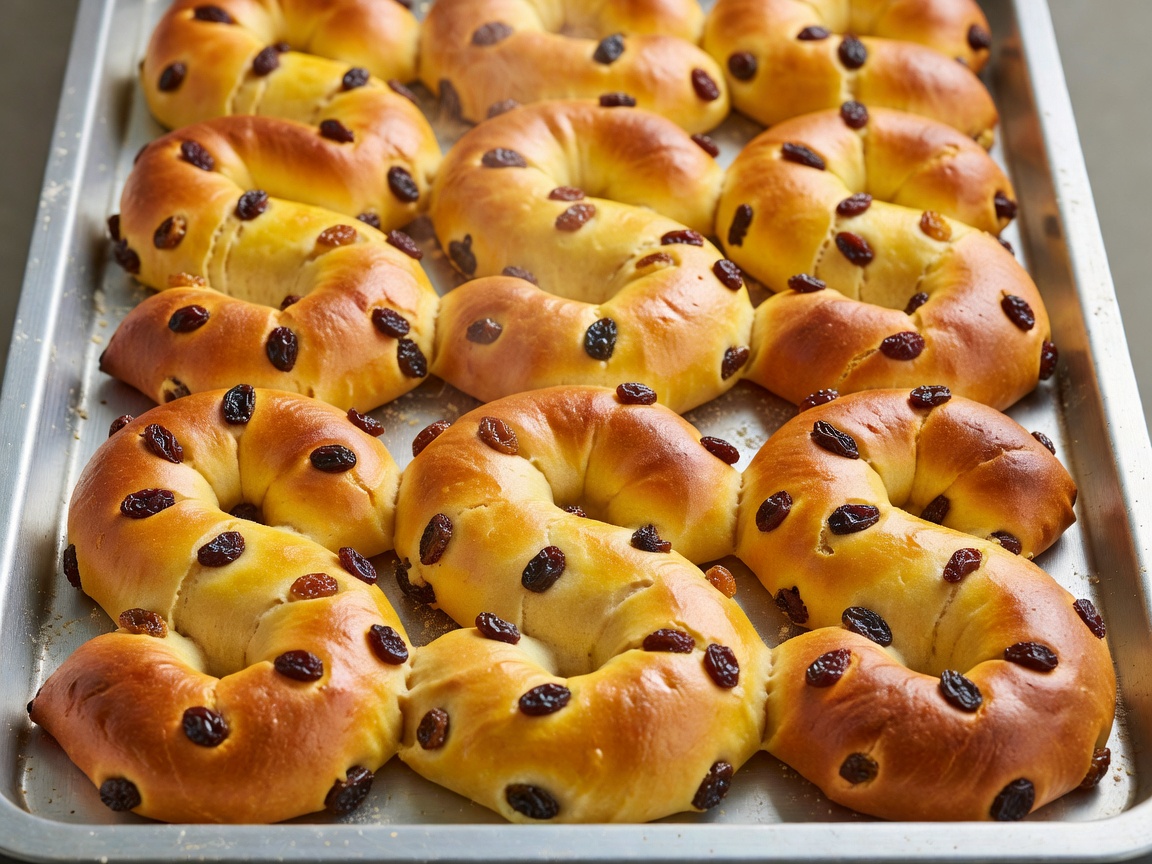
Lussekatter use a similar enriched dough coloured with saffron, shaped into an S and finished with raisins.
Home stollen with a marzipan centre
Ingredients
- 250 g mixed dried fruit
- 3 tbsp rum or orange juice
- 500 g strong white bread flour
- 7 g fast-action dried yeast
- 75 g caster sugar
- 1 tsp fine salt
- 1 tsp mixed spice
- Zest of 1 lemon
- 200 ml milk, lukewarm
- 1 large egg
- 125 g unsalted butter, very soft
- 75 g chopped mixed peel
- 50 g flaked almonds
- 200 g marzipan
- 50 g unsalted butter, melted, to finish
- Icing sugar, to dust generously
Method
- Soak the dried fruit in rum or juice, ideally overnight, so it does not draw moisture from the dough.
- Mix flour, yeast, sugar, salt, spice and zest. Add milk and egg and bring together.
- Knead for 8–10 minutes, then work in the soft butter a little at a time until the dough is smooth and glossy.
- Cover and leave in a warm place for 1½–2 hours, until roughly doubled.
- Gently knead in the drained fruit, peel and almonds. Pat into an oval about 25 × 20 cm.
- Roll the marzipan into a log 22 cm long, lay it just off-centre, and fold the dough over it, leaving the top edge slightly short to create the classic step.
- Place on a lined tray, cover and prove for 45–60 minutes, until puffy.
- Bake for 35–40 minutes. Cover loosely with foil after 20 minutes if the fruit on the surface darkens.
- Brush the hot loaf with melted butter, dust thickly with icing sugar, then dust again once cool.
Technique An enriched loaf is generally baked through at an internal temperature of about 88–93°C (190–200°F). A probe thermometer is more reliable than tapping the base of a soft, buttery bread.
Why the rise takes longer
Sugar draws water away from yeast, and fat coats the flour proteins. Both slow fermentation. Expect enriched dough to take noticeably longer than a plain white loaf, especially in a cool December kitchen.
Add butter late
Kneading the flour, liquid and egg first builds gluten before the butter softens it. Adding butter gradually gives a smoother, stronger dough that holds fruit without tearing.
 Technique
Read the dough
Ready dough has roughly doubled and springs back slowly when pressed with a floured finger.
Wrap tightly and wait
Stollen is traditionally made ahead and allowed to mellow. Once cold, wrap in parchment and foil and store somewhere cool; many bakers keep it for a week or two. For longer, freeze well wrapped and thaw at room temperature, then refresh the icing sugar.
Know what is inside
Stollen contains wheat, milk, egg and nuts (almonds and marzipan). The rum-soaked version contains alcohol; use orange juice when baking for children or guests who avoid alcohol.
When the loaf goes its own way
The dough barely rose
Check the yeast date and the milk temperature: hot milk can kill yeast. If the yeast is fine, give the dough more time somewhere warm, such as an oven with only the light switched on.
The crumb is dense and heavy
The dough may have been under-kneaded before the butter went in, or the fruit was added too early and cut the gluten. Knead fruit in gently after the first rise.
The fruit on the surface burned
Push exposed fruit pieces into the dough before proving, and cover the loaf with foil once it has good colour.
The loaf is raw near the marzipan
Marzipan slows heat transfer. Use a thermometer in the bread rather than the marzipan, and extend the bake with foil on top.
Next in the sequence: plan the sweet centre of the table.